every episode we produce is cut at 4001 white plains, bronx.
Kalliope Audio is a podcast production studio in the north Bronx. One engineer takes each show from raw takes to published feed — edit, mix, master, show notes, distribution — and every decision along the way is written into the delivery note.
Kalliope — Calliope, in the usual English spelling — was the eldest of the nine Muses, the one the Greeks credited with eloquence and epic poetry. We took the name as an instruction rather than a decoration.
Eloquence, in the old sense, was never about a beautiful voice. It was about an argument that held its shape from first line to last — the right thing said in the right order, with nothing in the way. That turns out to be a fair description of what a podcast editor is for.
Most of the shows that reach us are already good conversations. What they lack is shape. The guest finds the point in minute nineteen; the host’s best question arrives after a false start and a cough; the music comes in too loud and stays too long. None of that needs inventing. It needs deciding.
we don’t make people sound like someone else. we make them sound like themselves on the day everything went right.
— from the edit desk
So the studio is organised the way a good magazine desk is. One engineer owns your show from raw take to published feed, and the decisions are written down. A delivery note travels with every master — integrated loudness, true peak, what was cut and why — so nobody on your side has to take our ear on trust.
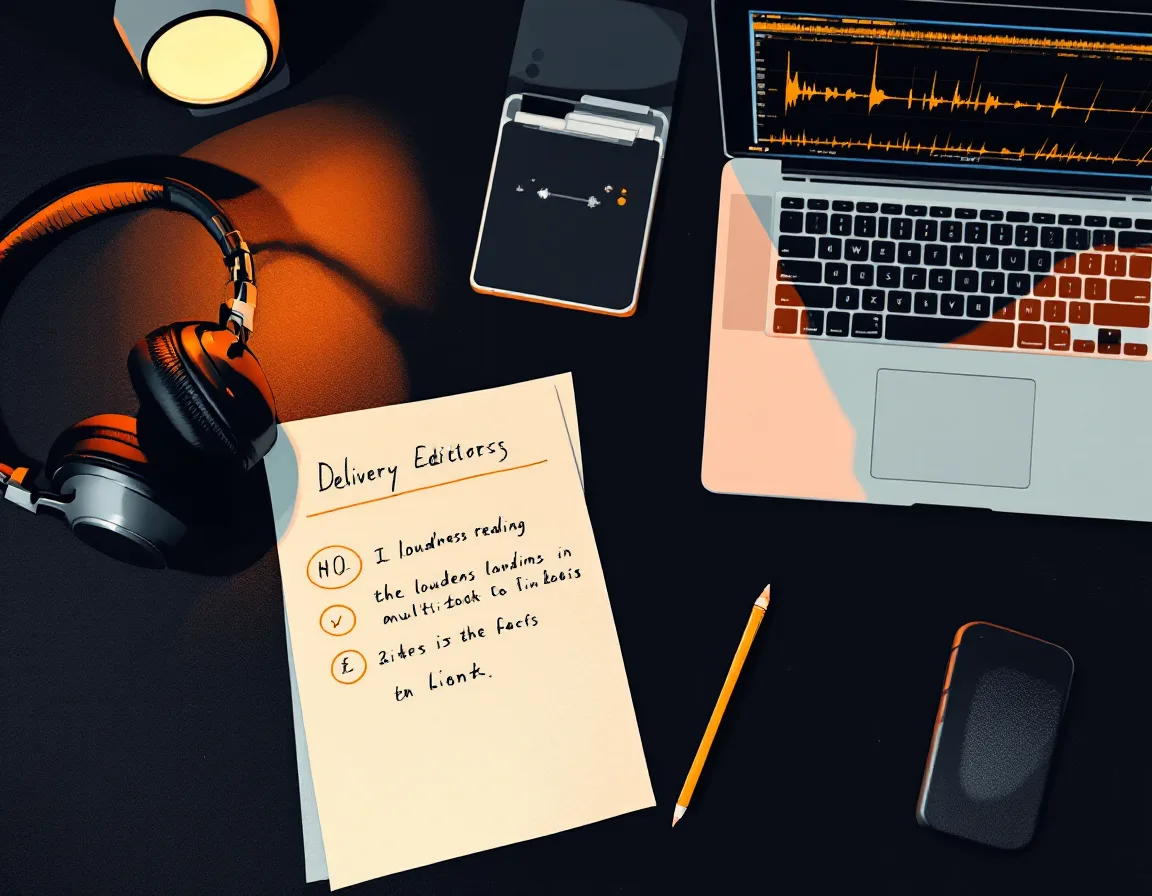
Every master leaves with a delivery note. This is the desk that writes them.
We work from 4001 White Plains, in the north Bronx, by appointment. Clients rarely visit; files arrive by link and leave the same way. The address still matters. It is where the listening happens, and it answers the question every brand eventually asks: who, exactly, is touching our show?
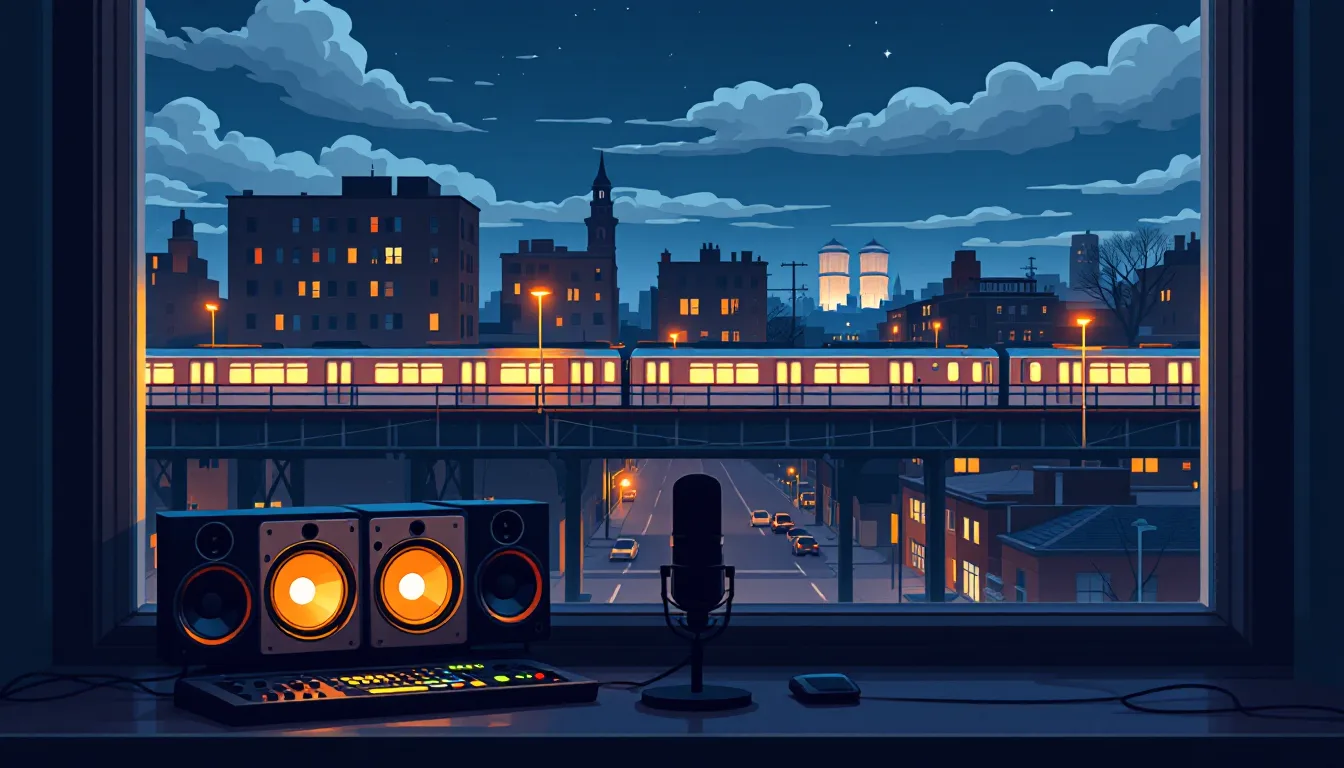
00:09:15 — the view from the desk
the elevated line runs down white plains road. so does your audience.
Most podcasts are heard on a commute — on earbuds, under a train, with half an ear on the next stop. We mix for that listener first: dialogue that survives a subway car, levels nobody reaches for between speakers, and a last check on a phone speaker before anything is called finished.
Mixed for the 2 and the 5, not the control room
00:14:52 — the house rules
what we keep, what we cut, logged as an edit decision list
An EDL is the sheet an editor hands to the next room: every event, every decision, in order. Ours doubles as a statement of principle. It applies to every show we take on, whatever the engagement.
The studio’s editing principles, written as an edit decision list
Event
Decision
Material
Reason
00100:00:12:04
Keep
the laugh that lands
Breaths, laughs and the half-second before a punchline stay. A conversation scrubbed of air stops sounding like people, and listeners notice before they can say why.
00200:04:31:18
Cut
the sentence that circles twice
When a thought lands on the second attempt, the first attempt goes. Cuts fall on a breath, never across a consonant, so the seam stays inaudible.
00300:11:02:09
Level
the quiet guest
Per-voice gain, EQ and compression before anything clever. If a listener has to touch the volume when the speaker changes, the mix has failed at its first job.
00400:18:47:00
Duck
the music bed
Music serves the words or leaves. Beds sit under speech, swell only in the gaps, and are out before the next sentence starts.
00500:23:15:22
Match
the sound your audience knows
On a show already running, we match the existing sound first. Changes are suggested only once the handover would pass unnoticed.
00600:31:40:11
Hold
the specification
−16 LUFS integrated, −1 dBTP true peak, on every master, stated in every delivery note. Taste is open to discussion; compliance is not.
00700:36:00:00
Print
the scope, before the files
Every engagement is scoped and priced in writing after the call. We invoice against exactly that — no subscription, no hourly meter running in the background.
00:22:08 — who sits in the chair
the two kinds of show we make, and the ones we’d send elsewhere
Kalliope Audio works with companies running a series and with hosts who already have something to say. The common thread is a recording worth shaping — not a volume of content to process.
For brands
a company show with a calendar and a legal team
Brand series need sound design that belongs to the company, a production rhythm that survives review rounds, and deliverables the video team can actually use.
a voice already worth hearing, a show not yet shaped
Hosts usually come to us with good conversations and no time to cut them. The pilot is the calibration: how tight the pacing runs, how much of the laugh survives.
All five stations, edit to distribution
One round of timestamped revisions per episode
A one-page recording brief before you start
Published to your feed on approval
$415 for the pilotThen $2,960 for an eight-episode season
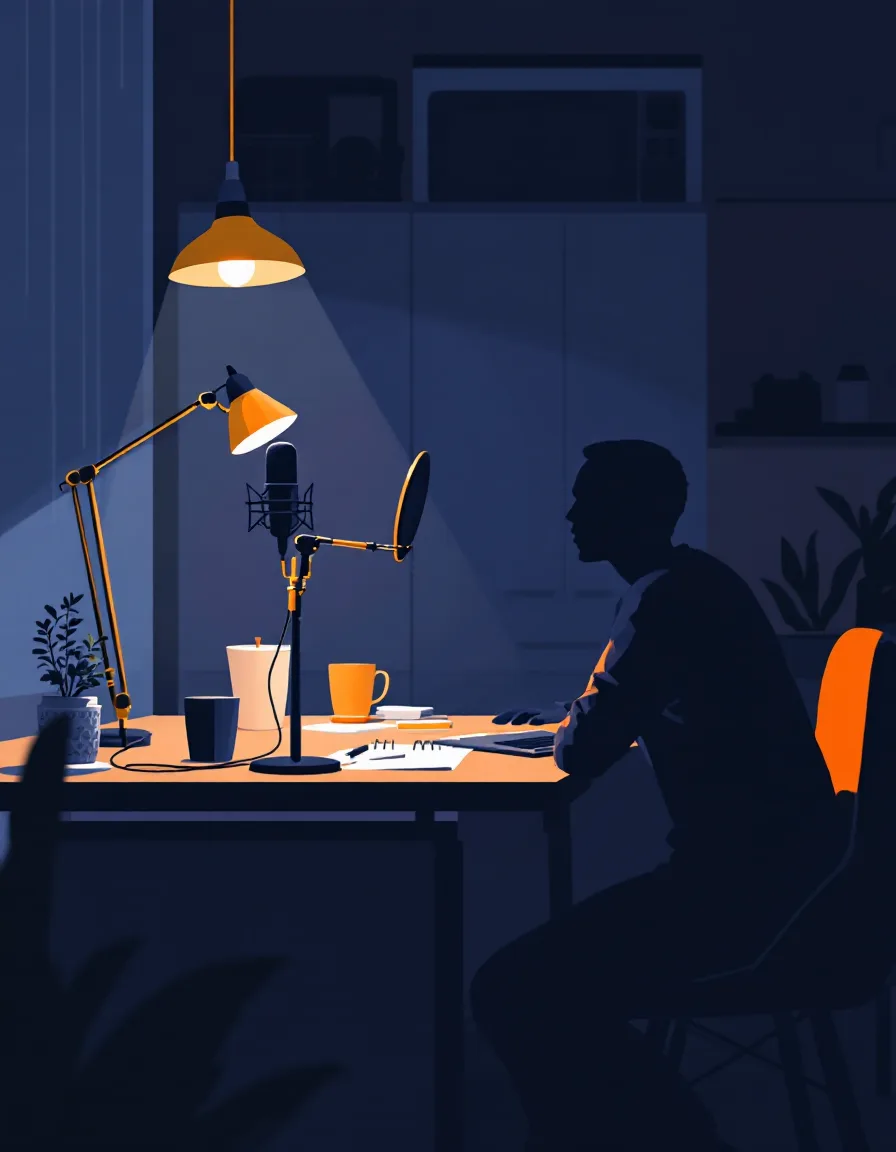
Scope a pilotMost raw takes are recorded somewhere like this. That is fine; the brief tells you how to make them usable.
00:36:00 — last segment
the brief takes five minutes. the scoping call takes thirty.
Tell us what the show is, who it’s for and how often it lands. We’ll come back with a written scope and a price — a single pilot episode is $415, edited, mixed, mastered to −16 LUFS, written up and published to your feed.